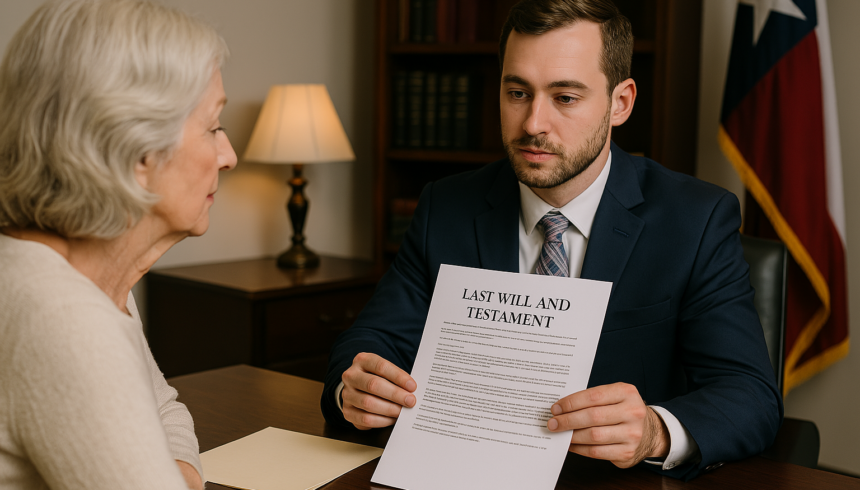
Will Lawyer in Texas: Why You Need One to Protect Your Legacy
April 7, 2025
  • The Lange Firm By The Lange Firm
  • No comment

Before proceeding, please review the  legal disclaimer.

Will Lawyer in Texas (2026 Guide): Why Having a Will Is One of the Most Important Things You Can Do for Your Family

Most people know they should have a will.

The problem is that many people keep putting it off.

They tell themselves:

  • “I’m too young.”
  • “I don’t have enough assets.”
  • “I’ll get around to it later.”
  • “My family already knows what I want.”

Unfortunately, life does not always wait for the perfect time to plan.

That is why many Texans eventually find themselves searching for:

👉 A will lawyer in Texas

A properly drafted will can provide clarity, protect loved ones, and help prevent unnecessary legal disputes after death.

Let’s look at what a will does, why it matters, and how a Texas will lawyer can help.


What Is a Will?

A will, formally known as a:

👉 Last Will and Testament

is a legal document that explains how you want your property distributed after your death.

A will can also identify:

  • Beneficiaries
  • Executors
  • Guardians for minor children
  • Funeral preferences
  • Other important wishes

In many cases, a will serves as the foundation of an estate plan.


Why Is Having a Will Important?

Without a valid will:

👉 Texas law decides who inherits your property.

This process is called:

👉 Intestate succession

When intestacy rules apply, your assets may pass according to state law rather than your personal wishes.

For many families, this can create unexpected results and unnecessary conflict.


What Happens If You Die Without a Will in Texas?

If you die without a will:

  • The probate court determines heirs under Texas law.
  • An administrator may be appointed to handle the estate.
  • Property distribution follows statutory inheritance rules.

This can become particularly complicated for:

  • Blended families
  • Unmarried couples
  • Families with stepchildren
  • Business owners
  • Individuals with unique wishes

According to the American Bar Association, dying without a will frequently creates additional delays, expenses, and uncertainty for surviving family members. (ABA, 2025)


What Can a Will Do?

A properly drafted Texas will can accomplish many important goals.


Name Who Receives Your Property

A will allows you to decide who inherits:

  • Real estate
  • Bank accounts
  • Personal property
  • Family heirlooms
  • Business interests

Rather than leaving those decisions to Texas intestacy laws.


Choose an Executor

An executor is the person responsible for:

  • Managing the estate
  • Paying debts
  • Handling probate
  • Distributing assets

Choosing your own executor often provides greater certainty than leaving the decision to a court.


Name Guardians for Minor Children

For parents, this may be one of the most important parts of a will.

A will allows you to express your wishes regarding:
👉 Who should care for your minor children if both parents pass away.


Reduce Family Disputes

A clear will often helps prevent disagreements involving:

  • Property distribution
  • Inheritance expectations
  • Estate administration

While no document eliminates every dispute, clear instructions can reduce confusion.


Do All Texans Need a Will?

While every situation is different:

👉 Most adults can benefit from having a will.

This is especially true for:

  • Parents
  • Homeowners
  • Married couples
  • Business owners
  • Individuals with significant assets
  • People with specific inheritance wishes

You do not need to be wealthy to need a will.


Does a Will Avoid Probate in Texas?

Generally:

👉 No.

This is one of the biggest misconceptions about wills.

A will usually must still go through:

👉 Probate

The probate process allows the court to:

  • Validate the will
  • Appoint the executor
  • Oversee estate administration

If avoiding probate is a goal, additional planning tools such as trusts may be worth considering.


What Makes a Will Valid in Texas?

Texas law establishes specific requirements for a valid will.

Generally, the person creating the will must:

  • Be at least 18 years old (or otherwise legally qualified)
  • Have testamentary capacity
  • Intend the document to function as a will

Most wills also require:

  • A written document
  • Proper execution
  • Appropriate witnesses

Improperly drafted wills can create significant probate complications later.


Can You Write Your Own Will?

Technically:

👉 Yes.

Texas recognizes certain self-prepared wills.

However, DIY estate planning often creates problems involving:

  • Ambiguous language
  • Improper execution
  • Missing provisions
  • Unintended consequences

Many probate disputes begin with poorly drafted estate planning documents.


What Is Testamentary Capacity?

To create a valid will, a person generally must understand:

  • The nature of making a will
  • Their property
  • Their family relationships
  • The effect of the document

This legal standard is known as:

👉 Testamentary capacity

Capacity disputes frequently arise in probate litigation involving elderly individuals.


Can a Will Be Challenged?

Yes.

Common grounds for will contests include:

  • Lack of capacity
  • Undue influence
  • Fraud
  • Improper execution

However, simply being unhappy with the will’s contents is usually not enough.


When Should You Update a Will?

Estate plans should be reviewed after major life events such as:

  • Marriage
  • Divorce
  • Birth of children
  • Death of beneficiaries
  • Significant financial changes
  • Business ownership changes

Many people create a will and then never revisit it for decades.

That can create problems later.


What Is the Difference Between a Will and a Trust?

A will and a trust are different legal tools.

A will:

  • Takes effect at death
  • Usually goes through probate

A trust:

  • Can operate during life
  • May help avoid probate
  • Can provide ongoing asset management

Some estate plans include both.


What Should You Bring to a Will Planning Meeting?

Helpful information often includes:

  • Family information
  • Asset information
  • Property ownership records
  • Beneficiary preferences
  • Guardian preferences for children

The more organized the information, the easier the planning process may be.


Common Misunderstandings About Wills

“I Don’t Have Enough Assets to Need a Will.”

Many wills address family issues, guardianship concerns, and personal wishes—not just wealth.


“My Family Already Knows What I Want.”

Verbal instructions often create confusion and disputes.


“A Will Avoids Probate.”

Usually not.

Most wills still go through probate court.


“I’m Too Young to Need a Will.”

Unexpected events can happen at any age.


Why Estate Planning Matters More Than Ever

According to Caring.com’s annual estate planning survey, a majority of American adults still do not have a will despite recognizing its importance. (Caring.com, 2025)

Unfortunately, many families only discover the consequences of not having a will after a crisis occurs.

Planning ahead often provides:

  • Clarity
  • Control
  • Peace of mind

for both individuals and their loved ones.


How The Lange Firm Helps Texas Families

At The Lange Firm, we help Texas families create estate plans tailored to their goals and circumstances.

This includes:

  • Wills
  • Trusts
  • Powers of attorney
  • Probate planning
  • Estate administration guidance

Because a properly drafted will is often one of the most important gifts you can leave your family.


Frequently Asked Questions About Wills in Texas

Do I need a lawyer to create a will in Texas?

Texas law does not require a lawyer, but professional guidance can help avoid mistakes that may create probate issues later.


What happens if I die without a will in Texas?

Texas intestacy laws determine who inherits your property if no valid will exists.


Does a will avoid probate?

Generally no. Most wills must still go through the probate process.


Can I change my will later?

Yes. Wills can often be updated after major life changes, provided legal requirements are satisfied.


Can a will be challenged?

Yes. Wills may be challenged based on issues such as capacity, undue influence, fraud, or improper execution.


Conclusion

A will is one of the most important estate planning documents a person can create.

Without one, Texas law—not your personal wishes—may determine how your property is distributed.

A properly drafted will can help:

  • Protect loved ones
  • Clarify inheritance wishes
  • Name guardians for children
  • Reduce family conflict
  • Simplify estate administration

Planning today can save your family significant stress and uncertainty tomorrow.

Key Takeaways:

  • A will allows you to control how your property is distributed after death
  • Without a will, Texas intestacy laws determine who inherits your assets
  • Wills can help protect loved ones, name guardians, and reduce future family disputes

Suggested Meta Description:
Need a will lawyer in Texas? Learn how wills work, what happens if you die without one, and why estate planning is essential for Texas families.


FAQ Schema-Ready Q&A Pairs

Q: Do I need a lawyer to create a will in Texas?
A: Texas law does not require a lawyer, but professional guidance can help avoid mistakes that may create probate issues later.

Q: What happens if I die without a will in Texas?
A: Texas intestacy laws determine who inherits your property if no valid will exists.

Q: Does a will avoid probate?
A: Generally no. Most wills must still go through the probate process in Texas.

Q: Can I change my will later?
A: Yes. Wills can often be updated after major life changes, provided legal requirements are satisfied.

Q: Can a will be challenged?
A: Yes. Wills may be challenged based on lack of capacity, undue influence, fraud, or improper execution.


Leave a Reply

Your email address will not be published. Required fields are marked *

    Contact us for a consultation

    *Please do not include any confidential or sensitive information in this form. This form sends information by non-encrypted e-mail which is not se.Submitting this form does not create an attorney-client relationship. Once I have read your submission, I may contact you for more information or to arrange for a consultation with you.

    Mr. Evan B. Lange is the attorney responsible for this website. | All meetings are by appointment only. | Principal place of business: Sugar Land and Houston, Texas.
    The information you obtain at this site is not, nor is it intended to be, legal advice. You should consult an attorney for advice regarding your individual situation. We invite you to contact us and welcome you to submit your claim for review. Contacting us does not create an attorney-client relationship. Please do not send any confidential information to us until such time as an attorney-client relationship has been established.