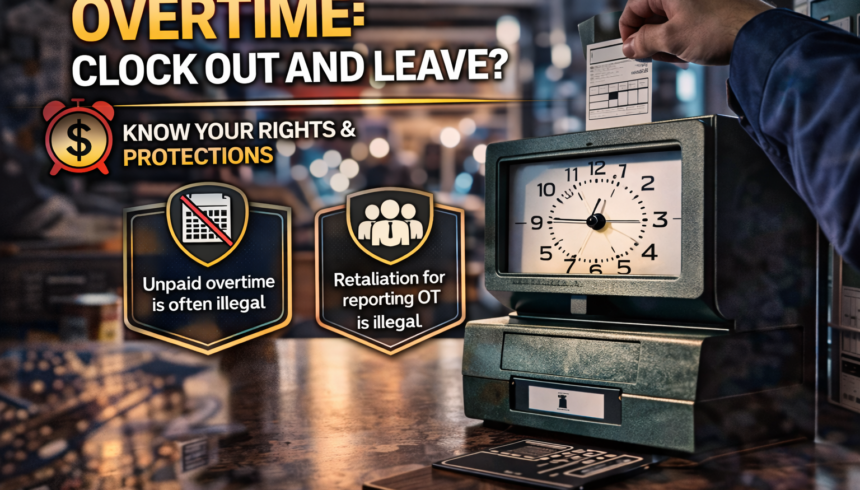
“Clock Out and Leave”: Why You Must Be Paid for All Hours Worked
April 16, 2026
  • Evan Lange By Evan Lange
  • No comment

Before proceeding, please review the  legal disclaimer.


“Clock Out and Leave”: Why You Must Be Paid for All Hours Worked

“Clock out and leave.”

It sounds simple—but in many workplaces, it doesn’t actually happen that way.

Employees are often told to clock out… and then stick around to finish tasks. Maybe it’s closing duties, cleaning up, or just “one last thing.”

Here’s the reality:

👉 If you’re working, you must be getting paid.

Anything else may violate wage laws.


What Does “Off-the-Clock Work” Mean?

Off-the-clock work happens when an employee performs job duties without being paid.

This can include tasks done:

  • Before clocking in
  • After clocking out
  • During unpaid breaks

Even if the task seems small, it still counts as work.


Common Examples of Unpaid Work

Many employees don’t realize how often off-the-clock work happens.

Some of the most common examples include:

  • Counting the cash register after clocking out
  • Cleaning or tidying your workstation
  • Completing closing duties
  • Restocking supplies
  • Finishing paperwork or reports
  • Answering work messages off the clock

If your employer requires or allows you to do these tasks, they may be required to pay you for that time.


What the Law Says

Under federal law, most employees must be paid for all hours worked.

This includes:

  • Time the employer requires you to work
  • Time the employer knows—or should know—you are working

👉 Employers cannot avoid paying wages by simply telling employees to clock out.


“But My Employer Told Me to Clock Out First…”

This is one of the most common situations.

An employer might say:

  • “Clock out, then finish closing.”
  • “We don’t pay overtime—just handle it after your shift.”
  • “It only takes a few minutes.”

None of that changes the legal requirement.

👉 If you’re still working, you should still be on the clock.


Why This Matters (Especially for Overtime)

Off-the-clock work doesn’t just affect your hourly pay—it can also impact overtime.

If those extra minutes or hours push you over 40 hours in a week, you may be entitled to:

  • Time-and-a-half pay

Unpaid work can add up quickly over time.


Can You Get in Trouble for Refusing?

This is where things get tricky.

Employers may discipline employees for not following procedures—but they cannot legally refuse to pay for time you actually worked.

There’s a difference between:

  • Workplace rules (like requiring approval)
  • Wage laws (which require payment)

Even if you break a rule, you still must be paid for your time.


Red Flags to Watch For

You may want to take a closer look if your employer:

  • Regularly asks you to clock out before finishing work
  • Adjusts your time records
  • Tells you certain tasks are “off the clock”
  • Discourages reporting all hours worked

These may indicate potential wage issues.


What Employees Should Do

If you find yourself working off the clock:

  • Keep track of your actual hours worked
  • Document tasks you’re asked to complete
  • Save any communications related to scheduling or duties

Accurate records can make a big difference.


Final Takeaway

The rule is simple:

👉 If you’re working, you should be getting paid.

It doesn’t matter if it’s:

  • Closing duties
  • Cleaning your station
  • Counting the register
  • Finishing “just one more task”

Clocking out doesn’t erase the work.


Leave a Reply

Your email address will not be published. Required fields are marked *

    Contact us for a consultation

    *Please do not include any confidential or sensitive information in this form. This form sends information by non-encrypted e-mail which is not se.Submitting this form does not create an attorney-client relationship. Once I have read your submission, I may contact you for more information or to arrange for a consultation with you.

    Mr. Evan B. Lange is the attorney responsible for this website. | All meetings are by appointment only. | Principal place of business: Sugar Land and Houston, Texas.
    The information you obtain at this site is not, nor is it intended to be, legal advice. You should consult an attorney for advice regarding your individual situation. We invite you to contact us and welcome you to submit your claim for review. Contacting us does not create an attorney-client relationship. Please do not send any confidential information to us until such time as an attorney-client relationship has been established.