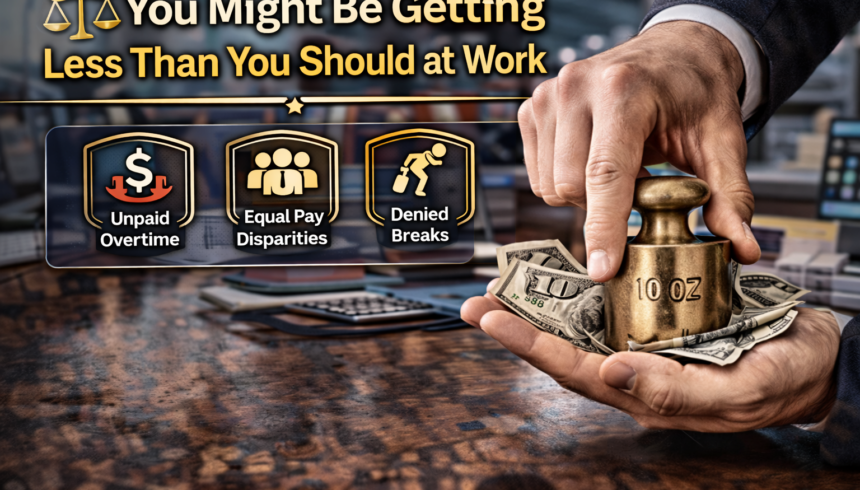
You Might Be Getting Less Than You Should at Work
April 17, 2026
  • Evan Lange By Evan Lange
  • No comment

Before proceeding, please review the  legal disclaimer.

You Might Be Getting Less Than You Should at Work

Overtime, tips, and pay rules aren’t always clear.

Most employees assume their paycheck is correct. You show up, do the work, and trust that everything is being calculated properly.

But here’s the uncomfortable truth:

👉 Wage violations are more common than people think.

From unpaid overtime to tip issues and “off-the-clock” work, small mistakes—or intentional shortcuts—can cost employees hundreds or even thousands over time.

Let’s break down where things often go wrong.


1. Overtime Isn’t Always Paid Correctly

One of the biggest areas where employees lose money is overtime.

Under federal law, most employees must be paid:

👉 Time-and-a-half for hours worked over 40 in a week

But common issues include:

  • Being told you’re “salaried” so you don’t qualify
  • Not being paid for extra hours worked
  • Having hours adjusted to avoid overtime
  • Being asked to work off the clock

👉 Your job title doesn’t determine overtime—your actual duties do.


2. Off-the-Clock Work Adds Up Fast

You clock out… but the work doesn’t stop.

Maybe it’s:

  • Cleaning your station
  • Closing duties
  • Responding to messages
  • Finishing tasks after your shift

It might seem minor—but over time, those unpaid minutes turn into real money.

👉 If you’re working, you should be getting paid.


3. Tip Issues in Service Jobs

If you work in a tipped position, your pay structure can get complicated.

Common problems include:

  • Being forced to share tips with managers
  • Unclear or unfair tip pools
  • Tips being reduced without explanation
  • Not receiving proper minimum wage when tips are low

👉 Tips belong to employees—not the employer.


4. Misclassification as “Exempt” or Contractor

Some employees are labeled as:

  • “Exempt” from overtime
  • Independent contractors

But that classification isn’t always correct.

Red flags include:

  • You follow strict schedules
  • You don’t control your work
  • You depend on one employer
  • Your role is central to the business

👉 If you’re misclassified, you could be missing out on overtime and other protections.


5. Pay Deductions You Didn’t Expect

Sometimes employees notice their paycheck is smaller—but don’t know why.

This can happen due to:

  • Unauthorized deductions
  • Uniform or equipment charges
  • Errors in hours worked
  • Miscalculated commissions

Not all deductions are allowed, especially if they reduce your pay below minimum wage.


Why This Matters

Wage issues don’t always look obvious.

It’s rarely one big mistake—it’s usually:

  • Small unpaid tasks
  • Slightly incorrect overtime
  • Minor tip issues

But over weeks and months?

👉 That can turn into serious money.


What You Should Watch For

Take a closer look if:

  • Your hours don’t match your paycheck
  • You’re working beyond your scheduled time
  • Your pay varies without explanation
  • You’re told certain work “doesn’t count”

If something feels off, it’s worth paying attention.


Final Takeaway

You don’t need to be a lawyer to understand one simple rule:

👉 If you’re working, you should be paid properly for it.

Overtime, tips, and wage rules can be confusing—but they exist for a reason.

If you’re not sure whether you’re being paid correctly, taking a closer look could make a bigger difference than you expect.

Leave a Reply

Your email address will not be published. Required fields are marked *

    Contact us for a consultation

    *Please do not include any confidential or sensitive information in this form. This form sends information by non-encrypted e-mail which is not se.Submitting this form does not create an attorney-client relationship. Once I have read your submission, I may contact you for more information or to arrange for a consultation with you.

    Mr. Evan B. Lange is the attorney responsible for this website. | All meetings are by appointment only. | Principal place of business: Sugar Land and Houston, Texas.
    The information you obtain at this site is not, nor is it intended to be, legal advice. You should consult an attorney for advice regarding your individual situation. We invite you to contact us and welcome you to submit your claim for review. Contacting us does not create an attorney-client relationship. Please do not send any confidential information to us until such time as an attorney-client relationship has been established.