 By The Lange Firm
Before proceeding, please review the legal disclaimer.
When someone dies and leaves behind real estate, transferring ownership to the rightful heirs or beneficiaries is often one of the most important steps in the estate administration process.
During that process, families sometimes encounter a document called a:
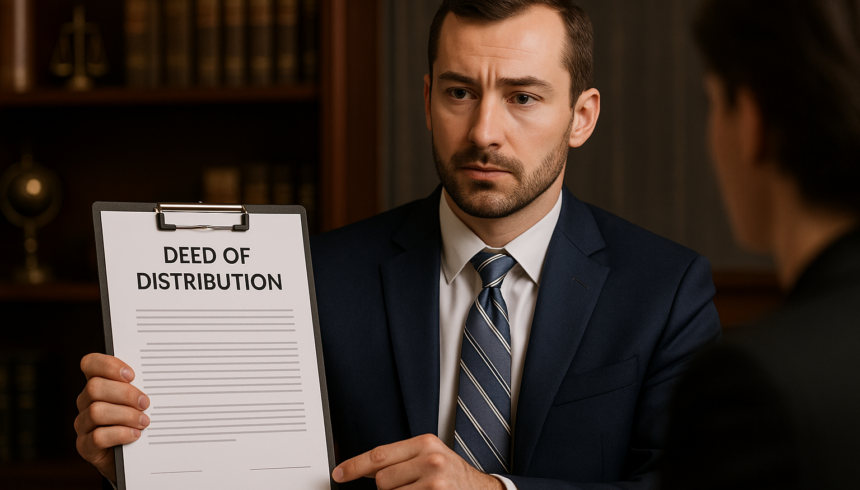
👉 Deed of Distribution
Many people ask:
What is a deed of distribution?
Is it required after probate?
Who signs it?
Does it transfer ownership of real estate?
How is it different from a regular deed?
If you’re handling a Texas estate, understanding how a deed of distribution works can help ensure that inherited property is properly transferred and recorded.
A deed of distribution is a legal document used to transfer ownership of real property from an estate to the individuals entitled to receive it.
In many cases, the deed serves as evidence that ownership has been distributed according to:
A will
A probate court order
Texas inheritance laws
Estate administration procedures
The deed helps establish the new ownership record for the property.
After a person dies, ownership of real estate often cannot simply be changed informally.
Even if everyone agrees who should receive the property, public records must typically be updated.
A deed of distribution helps:
Transfer legal title
Create a clear ownership record
Protect future buyers
Facilitate future sales or refinancing
Reduce title problems
Without proper documentation, ownership issues can arise years later.
A deed of distribution is often used after:
Probate administration
Estate settlement
Distribution of inherited real estate
It commonly appears when property is being transferred from the estate to:
Beneficiaries named in a will
Heirs under Texas intestacy laws
Trust beneficiaries
Family members receiving inherited property
Generally:
👉 Yes.
The deed is intended to transfer ownership from the estate to the person or persons entitled to receive the property.
Once properly executed and recorded, the public records generally reflect the new ownership.
No.
This is one of the most common misconceptions.
A warranty deed typically contains warranties or guarantees regarding title.
A deed of distribution generally serves a different purpose:
👉 Transferring estate property to beneficiaries.
The rights and protections provided may differ significantly.
The answer depends on the estate administration process.
In many situations, the document may be signed by:
An executor
An administrator
A personal representative
Another authorized individual
The authority to sign typically comes from:
Probate proceedings
Court orders
Estate administration authority
Often, but not always.
The answer depends on:
How the property is owned
Whether probate was opened
Whether a trust is involved
The nature of the transfer
Some transfers occur through probate administration.
Others may occur through alternative estate planning mechanisms.
While the specific contents may vary, the document often includes:
The deceased owner’s information
The property’s legal description
The identity of the beneficiaries
The authority for the transfer
Estate administration information
Accuracy is critical because errors can create title problems.
Generally:
👉 Yes.
Recording the deed with the county property records helps establish the new ownership chain.
Recording provides public notice of the transfer and helps maintain clear title records.
Failing to record the deed can create complications later.
Many estates involve multiple beneficiaries.
For example:
A parent may leave a home equally to three children.
In that situation, the deed may transfer ownership jointly to all beneficiaries unless other arrangements are made.
Beneficiaries may later choose to:
Sell the property
Partition ownership
Buy out other owners
Continue holding the property together
When someone dies without a will:
👉 Texas intestacy laws determine who inherits.
If probate is opened, a deed of distribution may still be used to transfer property to the appropriate heirs after ownership rights are determined.
Sometimes.
However, trust-owned property often follows different procedures.
When a trust owns real estate, transfers may occur through:
Trustee deeds
Trust administration documents
Other trust-related instruments
The appropriate document depends on the circumstances.
These documents serve different purposes.
Typically helps establish inheritance rights when probate has not been opened.
Typically transfers ownership after authority has been established through estate administration.
Both may affect real estate ownership, but they accomplish different goals.
Recording is often necessary to maintain clear title.
Property descriptions must be accurate.
Additional documentation may still be necessary.
Joint ownership can create future complications if not carefully planned.
Not necessarily.
Additional legal steps are often required to update title records.
Recording is typically essential to establish ownership publicly.
Not exactly. Estate-related transfers often involve different authority and purposes.
Property records often require separate action to reflect the transfer.
Real estate is often one of the most valuable assets in an estate.
Improper transfers can create:
Title defects
Delays in future sales
Ownership disputes
Probate complications
Additional legal expenses
Clear documentation helps protect both current and future owners.
At The Lange Firm, we help Texas families with:
Probate administration
Real estate transfers after death
Affidavits of heirship
Estate planning
Trust administration
Title-related estate issues
Because properly transferring inherited property is an important part of protecting a family’s legacy.
A deed of distribution is a legal document used to transfer real property from an estate to the beneficiaries or heirs entitled to receive it.
Generally yes. The purpose of the deed is to transfer ownership from the estate to the appropriate beneficiaries or heirs.
The document is often signed by an executor, administrator, or other authorized estate representative, depending on the circumstances.
Generally yes. Recording helps establish ownership and maintain a clear chain of title.
No. An affidavit of heirship helps establish inheritance rights, while a deed of distribution is used to transfer ownership after those rights have been determined.
A deed of distribution is an important tool for transferring inherited real estate after someone’s death.
While probate may determine who receives the property, the deed often serves as the document that formally transfers ownership and updates the public record.
A deed of distribution is commonly used to transfer real estate from an estate to heirs or beneficiaries
The deed helps establish a clear ownership record after probate or estate administration
Recording the deed is typically necessary to maintain proper title records
Multiple beneficiaries may receive ownership through a deed of distribution
Proper property transfers help prevent future title disputes and ownership complications
Suggested Meta Description:
What is a deed of distribution in Texas? Learn how inherited real estate is transferred after probate, who signs the deed, and why recording matters.
FAQ Schema-Ready Q&A Pairs
Q: What is a deed of distribution?
A: A deed of distribution is a legal document used to transfer real property from an estate to the beneficiaries or heirs entitled to receive it.
Q: Does a deed of distribution transfer ownership?
A: Generally yes. The purpose of the deed is to transfer ownership from the estate to the appropriate beneficiaries or heirs.
Q: Who signs a deed of distribution?
A: The document is often signed by an executor, administrator, or other authorized estate representative, depending on the circumstances.
Q: Does a deed of distribution need to be recorded?
A: Generally yes. Recording helps establish ownership and maintain a clear chain of title.
Q: Is a deed of distribution the same as an affidavit of heirship?
A: No. An affidavit of heirship helps establish inheritance rights, while a deed of distribution is used to transfer ownership after those rights have been determined.

Follow our newsletter to stay updated.

2025- The Lange Firm all rights reserved.

Mr. Evan B. Lange is the attorney responsible for this website. | All meetings are by appointment only. | Principal place of business: Sugar Land and Houston, Texas.
The information you obtain at this site is not, nor is it intended to be, legal advice. You should consult an attorney for advice regarding your individual situation. We invite you to contact us and welcome you to submit your claim for review. Contacting us does not create an attorney-client relationship. Please do not send any confidential information to us until such time as an attorney-client relationship has been established.