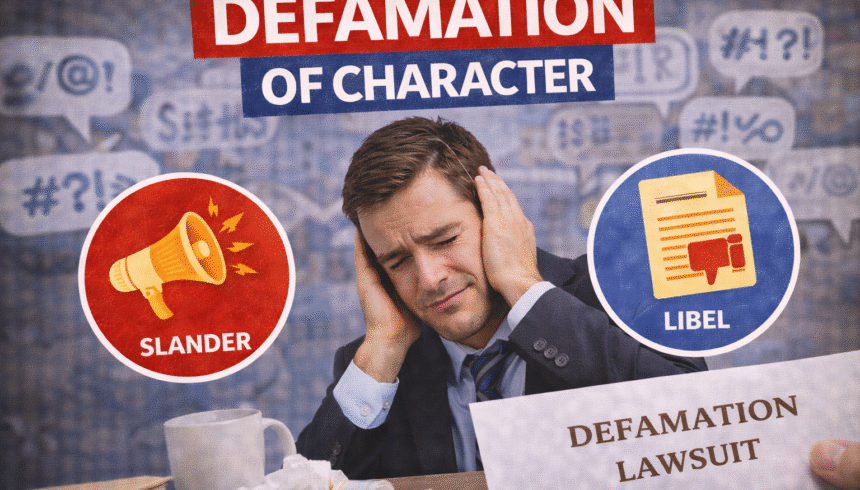
Defamation of Character in the Workplace: When Workplace Gossip Crosses the Legal Line
February 11, 2026
  • Evan Lange By Evan Lange
  • No comment

Before proceeding, please review the  legal disclaimer.

Defamation of Character in the Workplace: When Workplace Gossip Crosses the Legal Line

Workplace rumors happen. Personalities clash. Managers vent. Coworkers talk.

But sometimes, what’s being said goes beyond office gossip and starts to damage someone’s reputation, career, or livelihood.

That’s when employees begin asking:
“Is this defamation?”
“Can I sue for defamation of character in the workplace?”

In Texas, defamation in the workplace is real—but it’s also more legally complex than many people assume. Not every false or hurtful statement qualifies. Understanding the difference between unfair criticism and illegal defamation is critical.


What Is Defamation of Character?

Defamation occurs when someone makes a false statement of fact about another person, communicates it to others, and causes harm.

There are two main types:

  • Libel – written defamation (emails, reports, messages)

  • Slander – spoken defamation

In the workplace context, defamation can involve supervisors, coworkers, HR personnel, or even former employers.


What Must Be Proven in a Workplace Defamation Claim?

To successfully claim defamation in Texas, an employee generally must show:

  • A false statement of fact was made

  • The statement was communicated to others

  • The statement caused harm

  • The person who made it acted negligently or intentionally

Each element matters. Missing one can defeat the claim.


Opinion vs. Defamation: A Critical Distinction

One of the biggest misunderstandings about defamation is the difference between a fact and an opinion.

Statements like:

  • “She’s not a team player.”

  • “He’s bad at his job.”

  • “I don’t trust her.”

These are opinions. Even if unfair, they are usually not defamation.

However, statements like:

  • “He stole company money.”

  • “She falsified records.”

  • “He committed fraud.”

If false, these can qualify as defamation because they assert specific facts.


Common Workplace Defamation Scenarios

Workplace defamation often appears in situations such as:

False Accusations of Misconduct

An employee is falsely accused of theft, harassment, or policy violations.

False Statements in Performance Reviews

A manager knowingly includes fabricated incidents in a formal evaluation.

HR Investigations Based on False Claims

An employer spreads unverified accusations that damage the employee’s reputation.

Negative Job References

A former employer provides false information to prevent someone from getting hired elsewhere.

These situations can significantly impact career opportunities.


Internal Communications and Employer Privilege

Employers often have what’s called a qualified privilege when discussing employee performance internally.

This means managers can discuss performance or discipline with other decision-makers without automatically committing defamation.

However, that privilege can be lost if:

  • The statement is made with malice

  • The employer knows it’s false

  • The information is shared beyond those who need to know

Privilege is not unlimited protection.


Defamation vs. Retaliation

Sometimes false statements are made after an employee:

  • Reports harassment

  • Files a complaint

  • Requests medical leave

  • Raises legal concerns

In these cases, defamation may overlap with retaliation claims, which can strengthen the overall legal case.


How Defamation Causes Harm

Harm in workplace defamation cases may include:

  • Termination

  • Demotion

  • Loss of promotion

  • Damaged professional reputation

  • Lost future employment opportunities

  • Emotional distress

The more measurable the damage, the stronger the potential claim.


What Employees Should Do If They Suspect Defamation

If you believe false statements are being made about you at work:

  • Document exactly what was said

  • Identify witnesses

  • Save written communications

  • Review your personnel file

  • Avoid emotional reactions that escalate the situation

Strong documentation is essential.


Can You Sue for Workplace Defamation in Texas?

Yes—but only if the legal elements are met.

Many workplace disputes feel defamatory but do not meet the legal threshold. Courts are cautious about turning routine workplace disagreements into lawsuits.

The key question is whether the statement was:

  • False

  • Factual (not opinion)

  • Harmful

  • Made improperly


When Legal Guidance Is Important

Workplace defamation cases are highly fact-specific. An employment attorney can evaluate:

  • Whether statements meet the legal definition

  • Whether privilege applies

  • Whether retaliation is involved

  • What damages may be recoverable

Sometimes the better legal claim is not defamation—but retaliation or discrimination.


Final Takeaway

Not every rumor or unfair comment at work is defamation. But when false statements of fact damage your reputation and career, the law may provide remedies.

The difference between office gossip and actionable defamation lies in the details—what was said, who heard it, whether it was false, and what harm resulted.

Understanding that distinction is the first step toward protecting your professional reputation.


Leave a Reply

Your email address will not be published. Required fields are marked *

    Contact us for a consultation

    *Please do not include any confidential or sensitive information in this form. This form sends information by non-encrypted e-mail which is not se.Submitting this form does not create an attorney-client relationship. Once I have read your submission, I may contact you for more information or to arrange for a consultation with you.

    Mr. Evan B. Lange is the attorney responsible for this website. | All meetings are by appointment only. | Principal place of business: Sugar Land and Houston, Texas.
    The information you obtain at this site is not, nor is it intended to be, legal advice. You should consult an attorney for advice regarding your individual situation. We invite you to contact us and welcome you to submit your claim for review. Contacting us does not create an attorney-client relationship. Please do not send any confidential information to us until such time as an attorney-client relationship has been established.