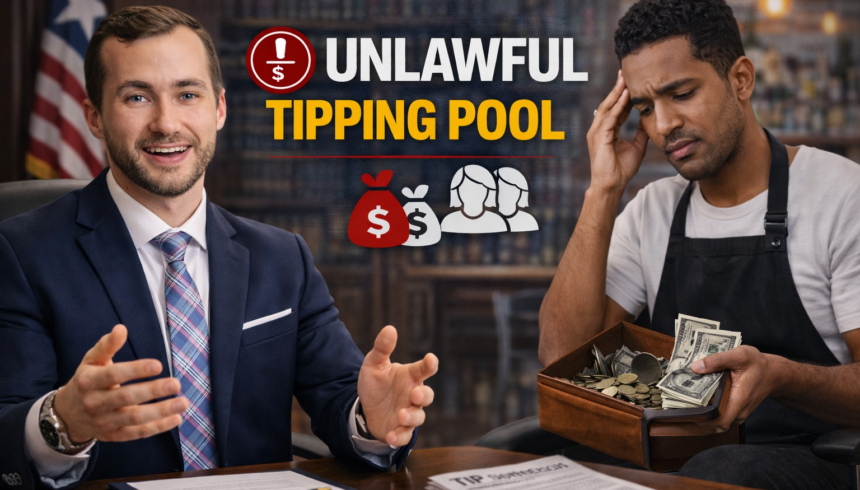
Steakhouse Chain Ordered to Pay Over $21 Million Over Unlawful Tipping Pool
March 31, 2026
  • Evan Lange By Evan Lange
  • No comment

Before proceeding, please review the  legal disclaimer.

Steakhouse Chain Ordered to Pay Over $21 Million Over Unlawful Tipping Pool

Tipping is a major part of income for many restaurant workers. But when employers mishandle tips—even unintentionally—it can lead to serious legal consequences.

In a recent high-profile case, a national steakhouse chain was ordered to pay over $21 million to employees after violating federal wage laws related to tipping practices.

So what happened—and what does it mean for workers and employers?

Let’s break it down.


What Is a Tipping Pool?

A tipping pool is a system where tipped employees share a portion of their tips with other staff members.

Common participants in a lawful tip pool may include:

  • Servers
  • Bartenders
  • Bussers
  • Food runners

The idea is to distribute tips among workers who contribute to the customer experience.


When Is a Tipping Pool Illegal?

Tipping pools become illegal when employers include workers who are not eligible to receive tips.

Under federal law, employers generally cannot allow managers or supervisors to take part in tip pools.

Other violations may include:

  • Requiring employees to share tips with back-of-house staff when not permitted
  • Taking a portion of tips for the business
  • Failing to pay proper minimum wage when using a tip credit

These violations can quickly add up—especially across large workforces.


What Happened in This Case?

In this case, the steakhouse chain was found to have:

  • Included ineligible employees in its tip pool
  • Distributed tips in a way that violated federal wage laws
  • Potentially reduced the earnings of tipped workers

As a result, the company was ordered to pay more than $21 million in back wages and damages to affected employees.

Cases like this often involve hundreds—or even thousands—of workers across multiple locations.


Why the Penalty Was So High

Wage violations involving tips can escalate quickly for several reasons:

1. Large Number of Employees

Restaurant chains often have many employees, so violations affect multiple workers.


2. Long Time Periods

If unlawful practices continue for months or years, damages accumulate.


3. Double Damages

Under federal law, employers may be required to pay:

  • Back wages
  • Plus an equal amount in liquidated damages

This can effectively double the financial impact.


Key Tip Pooling Rules Under Federal Law

To stay compliant, employers must follow strict rules:

  • Only eligible employees can participate in tip pools
  • Managers and supervisors cannot keep employee tips
  • Employers cannot take tips for business use
  • Tip credit rules must be properly followed

Violations can trigger both government enforcement and private lawsuits.


What This Means for Employees

If you work in a tipped position, it’s important to understand:

  • Who is included in your tip pool
  • Whether managers or supervisors receive tips
  • Whether your wages reflect proper tip credit rules

If tips are being distributed improperly, it may affect your earnings more than you realize.


What Employers Should Learn From This Case

For employers, this case is a reminder that tipping policies must be handled carefully.

Even well-intentioned policies can create legal risk if they do not comply with wage laws.

Employers should regularly review:

  • Tip pool structures
  • Employee classifications
  • Wage and hour practices

The cost of noncompliance can be significant.


Common Red Flags in Tipping Practices

Employees may want to pay attention if:

  • Managers are sharing in tips
  • Tips seem lower than expected without explanation
  • The tip pool includes roles that do not interact with customers
  • Policies are unclear or inconsistently applied

These may indicate potential issues.


Final Takeaway

The $21 million penalty against this steakhouse chain highlights how serious tipping violations can become.

Tip pooling is allowed—but only when it follows strict legal guidelines.

When employers cross the line, the financial consequences can be substantial, and employees may lose income they rightfully earned.

Understanding tipping laws helps both workers and employers avoid costly mistakes—and ensures that tips go where they belong.


Leave a Reply

Your email address will not be published. Required fields are marked *

    Contact us for a consultation

    *Please do not include any confidential or sensitive information in this form. This form sends information by non-encrypted e-mail which is not se.Submitting this form does not create an attorney-client relationship. Once I have read your submission, I may contact you for more information or to arrange for a consultation with you.

    Mr. Evan B. Lange is the attorney responsible for this website. | All meetings are by appointment only. | Principal place of business: Sugar Land and Houston, Texas.
    The information you obtain at this site is not, nor is it intended to be, legal advice. You should consult an attorney for advice regarding your individual situation. We invite you to contact us and welcome you to submit your claim for review. Contacting us does not create an attorney-client relationship. Please do not send any confidential information to us until such time as an attorney-client relationship has been established.